
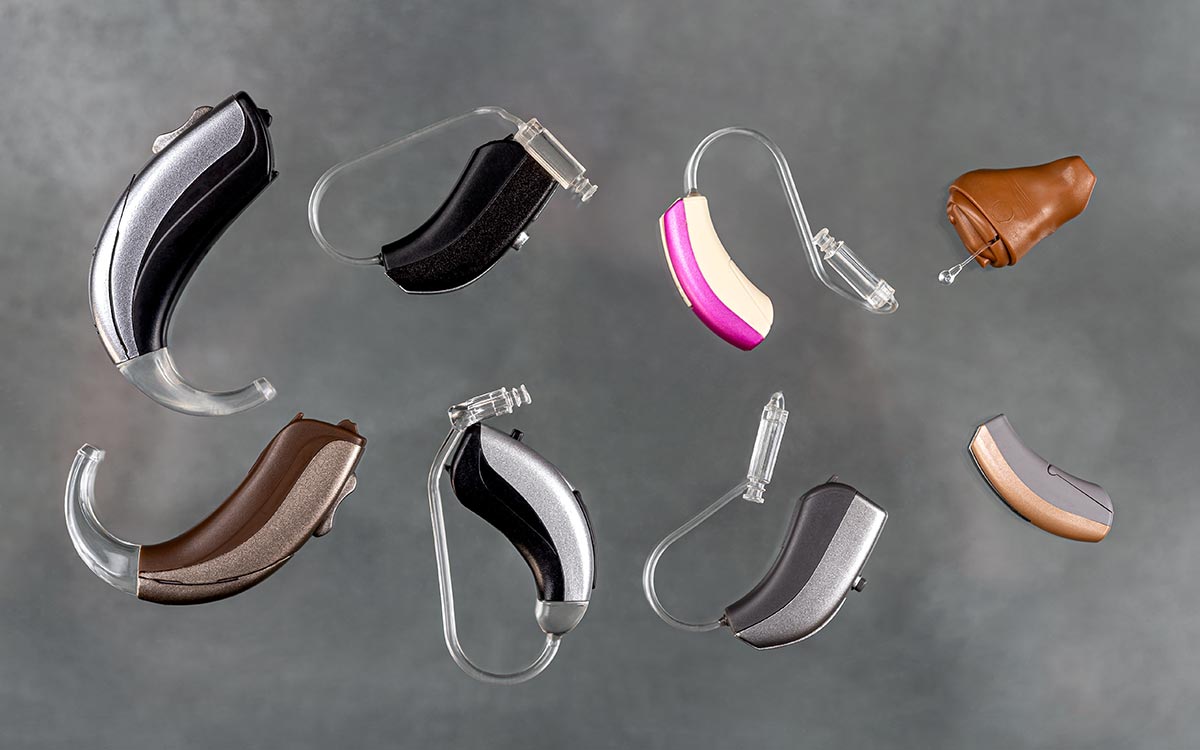
With so many choices in terms of dimensions, style, and technology, the process of picking an instrument can feel quite intense. Fortunately, there is an ideal hearing solution for every individual, regardless of their lifestyle or the severity of their hearing loss or tinnitus. The key is merely choosing the one that fits you best.
Feeling positive about your choice begins with knowing how different hearing aids function and compare. Today, we’re breaking down the various hearing aid styles and what makes each one unique.
Understanding In-the-Canal (ITC) Models
Basic Summary:
These hearing aids are placed partially inside the canal, making them visible only slightly from the outside.
Why users select them:
- Highly discreet than larger models
- Individualized molding ensures long-term wearing comfort
- An effective option for those with moderate hearing needs
First-time wearers frequently lean toward ITC aids because they strike an ideal compromise between size and performance.
Ultra-Discreet Invisible-in-Canal (IIC) Aids
How they function:
IIC hearing aids are the tiniest custom style available. This style fits deep in the ear for a completely covert appearance.
Why they are favored:
- The best option for users prioritizing appearance
- Natural sound quality due to microphone placement
- Featherweight and comfortable
Because of their small size, IIC devices typically work best for mild to moderate hearing loss and for those who prefer a nearly invisible option.
In-the-Ear (ITE) Hearing Aids
Structural Data:
These models fill either the full or bottom half of the outer ear bowl. These are custom-fabricated for an exact match based on your ear’s anatomy.
Value Offering:
- The bigger size makes it possible to include more internal components and longer-lasting batteries
- The physical size is easier to grip and adjust for users with fine motor concerns
- Powerful enough to provide enough power for severe hearing needs while remaining in-the-ear
Users often select these units for their straightforward, single-piece construction that avoids any external wiring or tubing.
Traditional BTE Models
Description:
A BTE hearing aid is placed outside the ear for an optimal fit. These models use an individualized earmold or tubing to direct sound inside.
Reasons for Selection:
- Known for being exceptionally adaptable and robust
- Effective for almost every level of hearing impairment
- Large enough to include sophisticated software and modern rechargeable technology
The combination of ease of use and powerful sound makes BTE aids a top contender for many patients.
Receiver-in-Canal (RIC) Hearing Aids
Design Specifications:
The RIC style keeps the main housing behind the ear while moving the receiver into the ear canal itself.
Why people select them:
- Provides a remarkably clear and lifelike listening experience
- Compact, feather-light, and comfortable
- Great for multiple levels of hearing loss
RIC devices are one of today’s most popular models, thanks to their blend of comfort, aesthetics, and performance.
Long-Term “Set and Forget” Hearing Aids
What they represent:
An audiologist places these specialized hearing aids deep into the canal, where they stay for multiple weeks.
The Appeal:
- Eliminates the need to put in or take out the device every day
- Offers a 100% discreet solution for hearing health
- You can go about your whole life—including sports and rest—while wearing them
For a “hands-off” approach to auditory assistance, extended-wear technology is the top recommendation.
Wireless Smart Syncing
Tech Details:
Bluetooth-ready hearing aids allow for a wireless digital bridge between your hearing technology and your smart devices.
Why go wireless:
- Turn your hearing aids into wireless earphones for all your favorite audio
- Provides an unobtrusive way to manage your hearing environment from your mobile screen
- Perfectly matched for the requirements of an advanced, connected individual
This wireless technology is found in many modern behind-the-ear and in-the-canal models.
Surgically Placed Middle-Ear Systems
What they represent:
An implantable method that works by shaking the tiny bones inside the ear to provide amplified audio.
Why people pick them:
- Serves as a critical alternative for those who find no success with traditional amplification
- This is a specialized alternative for those with chronic ear canal sensitivity.
Candidates for middle-ear implants should undergo a comprehensive evaluation by a hearing specialist.
Selecting Your Ideal Hearing Option
Selecting an instrument is a personal process that takes into account your hearing severity, lifestyle habits, and visual preferences. By consulting a specialist, you can investigate various models and see which one feels most natural to you.
Begin your journey to clearer sound by setting up a hearing test now. This simple action is the basis for improved hearing and better connections with those around you.
Sources:
https://www.mayoclinic.org/diseases-conditions/hearing-loss/in-depth/hearing-aids/art-
20044116
https://www.hearinglife.com/hearing-aids/types
https://www.nidcd.nih.gov/health/hearing-aids