
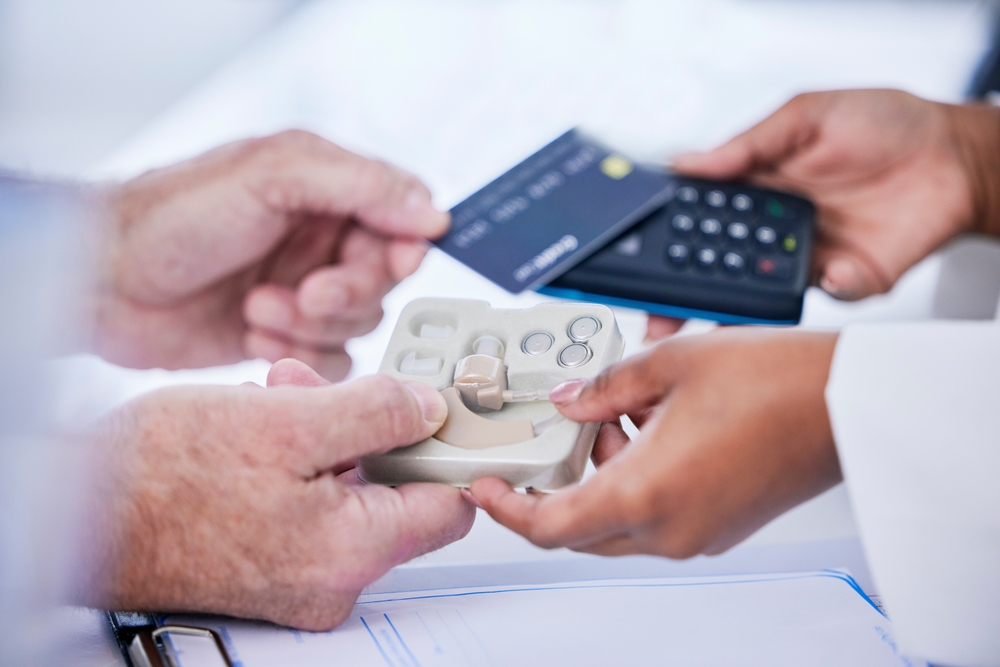
When exploring treatment options for age-related hearing loss or presbycusis, the initial clinical cost of amplification devices can be striking. Varying by technological tiers and clinical customization requirements, modern systems require a wide range of financial commitments. For many people, that comes as a surprise, and it can understandably feel like a stopping point.
While the financial baseline is significant, it does not represent the final out-of-pocket reality. A high percentage of candidates remain unaware that retail pricing is seldom the final out-of-pocket obligation. A combination of third-party coverage, pre-tax medical accounts, and medical credit lines can significantly offset or defer the expense.
This guide walks you through the most common options so you can understand what’s available before you go into an appointment and, hopefully, feel more confident about the investment in your hearing health.
Maximizing Private and Employer Insurance Benefits for Acoustic Devices
Before assuming you’ll be paying completely out of pocket, start with your insurance.
For individuals holding commercial or corporate group health policies, benefit structures for otologic devices are highly inconsistent. A number of policies indemnify a fraction of the cost, contrasted with plans that provide a capped benefit cap. Regrettably, specific commercial contracts provide no financial remedy for hearing preservation. To clarify your position, review your summary of benefits or contact the carrier regarding otolaryngological provisions. You should explicitly confirm benefit renewal intervals, whether post-fitting care is covered, and contracted clinic networks.
When navigating public health options, recognize that traditional federal Medicare components do not subsidize these devices. Fortunately, choice Medicare Part C programs fill this gap by providing an annual allowance or discounted device network.
Under Medicaid programs, specific device coverage is highly dependent upon regional state mandates. A selection of states do extend hearing aid benefits to eligible adults, making a proactive provider query essential.
HSA & FSA: An Overlooked Way to Pay for Hearing Aids
Possessing an HSA or an FSA equips the patient with a highly efficient asset for absorbing device costs.
Hearing aids are a qualified medical expense, which means you can use pre-tax dollars to cover the cost. That alone can make a big difference. As a case in point, combining a $2,000 equipment cost with a 22% tax bracket yields a net savings of several hundred dollars. It is vital to distinguish between persistent HSA balances and time-delimited FSA funds that vanish at year-end. This structural timeline makes it imperative to exhaust expiring corporate flex funds before the termination date! The IRS rules extend to both advanced prescription systems and compliant OTC variants, justifying a review of your account balance.
Amortization and Medical Financing Strategies for Advanced Hearing Systems
Many hearing care practices offer hearing aid financing options that allow you to spread payments over time instead of paying everything up front. These specific arrangements, often administered via platforms such as CareCredit, frequently feature promotional interest-free windows. That means you don’t have to choose a lower-quality device just to keep costs down in the short term.
Discussing medical credit structures is a standard aspect of modern healthcare consultations. If the projected capital allocation is a concern, highlight this issue during your clinical consultation. Remember, there’s a reason all these options exist! Ultimately, accessing essential medical technology to preserve communication should remain accessible without risking economic duress.
Maximizing VA Healthcare Services for Service-Connected Hearing Deficits
With hearing deficits ranking as a primary consequence of military service, the VA delivers comprehensive support mechanisms for veterans.
Eligible veterans can receive hearing aids at no cost through VA healthcare. Even in the absence of an official service-connected disability rating for hearing, overall VA priority grouping may grant access. For those who have yet to leverage their military benefits, initiating a query with your regional VA medical center is strongly advised.
Exploring Philanthropic and Non-Profit Foundations for Auditory Assistance
Non-governmental organizations frequently operate dedicated programs designed to make otologic equipment accessible. Organizations like the Starkey Hearing Foundation and Lions Club International offer assistance to qualifying individuals. Furthermore, a number of municipal and state agencies sponsor dedicated initiatives for economically disadvantaged adults.
Though administrative processing times and qualification reviews apply, these non-profit options provide crucial lifelines for the under-insured. Utilizing the online assessment tools provided by these charities is a direct way to open a dialogue regarding hardware assistance.
OTC Hearing Hardware: A Technical Assessment of Lower-Cost Auditory Options
Over-the-counter (OTC) hearing products represent an entry-level financial tier, generally priced between $200 and $1,000 for a dual-device configuration. This retail equipment is specifically engineered to address uncomplicated, mild-to-moderate sensory changes in mature populations.
Yet, without the intervention of an expert to customize the acoustic programming, many users fail to achieve adequate speech intelligibility. For moderate or more advanced hearing loss, prescription devices fitted by a hearing professional tend to deliver better outcomes.
Before choosing OTC purely for cost reasons, it’s worth getting a hearing evaluation to ensure what will actually work for you. Retail devices function adequately as a temporary placeholder while awaiting insurance pre-authorization or institutional grant approvals. They’re better than nothing and offer a decent temporary fix, but they’re not ideal for the long term.
A Collaborative Approach to Affordable Hearing Care and Device Selection
Our administrative staff is deeply experienced in aligning technological needs with realistic financial solutions for our community. The available matrix of alternative funding mechanisms is frequently broader than patients anticipate.
We request that you present your comprehensive policy details during your consultation so we can map out covered benefits and structure an affordable plan. Phone our office location today to secure a consultation slot or coordinate your evaluation via our website. Our practice is committed to identifying an optimization path that respects your budget while restoring your quality of life.