
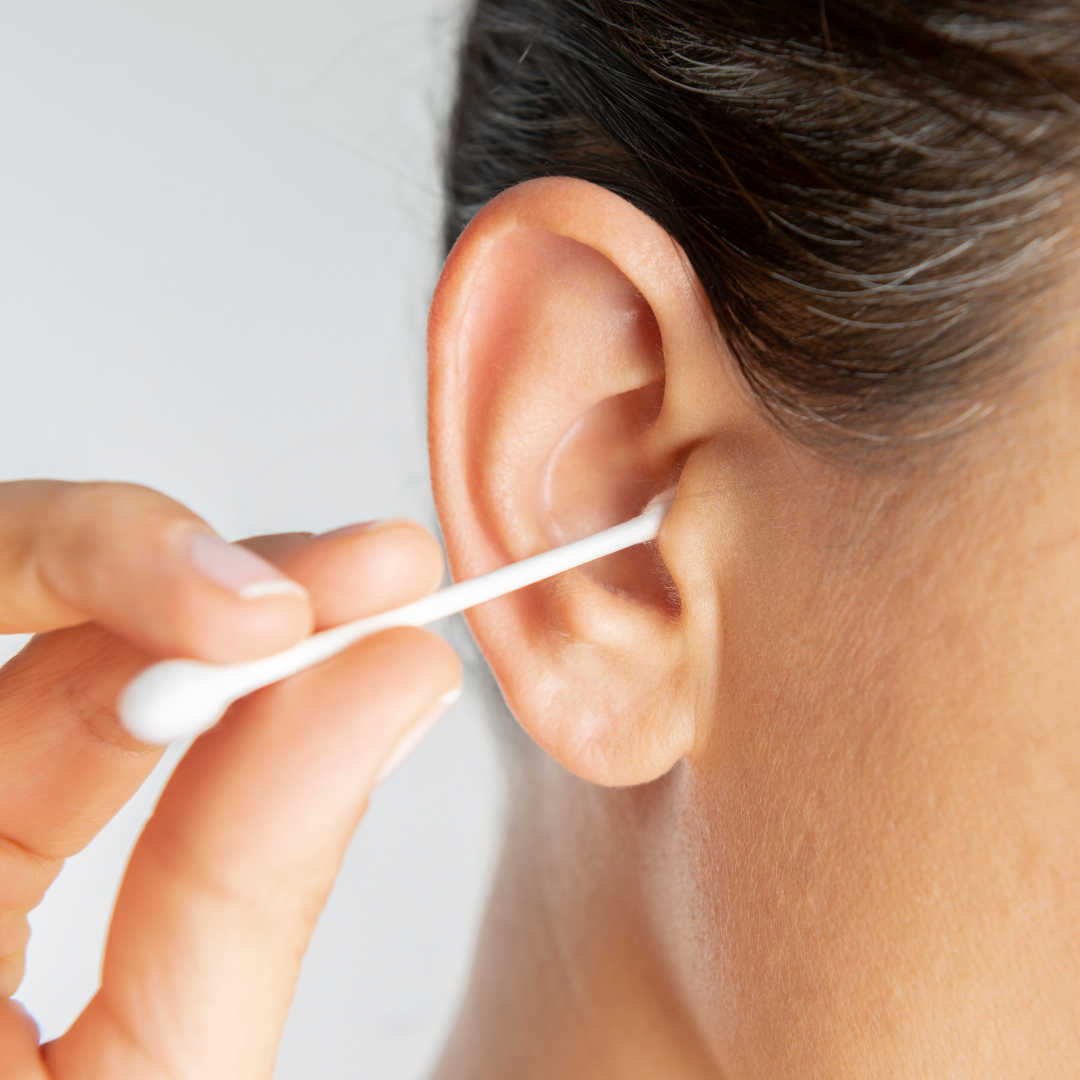
While cotton buds look like simple cleaning instruments, inserting them directly into your ear canal complicates hygiene and can injure sensitive structures. Our specialists determine if cerumen warrants clinical clearing and advise on targeted methods designed to protect your hearing health. The auditory canal generally manages its own cleaning; however, should impaction arise, our team provides safe clinical earwax removal.
The Hidden Dangers of Cleaning Ears with Q-Tips
Clinically speaking, earwax, or cerumen, should never be regarded as dirt or debris. Cerumen works to entrap airborne particles, deter infectious pathogens, hydrate the auditory canal, and protect thin dermal layers. Rhythmic jaw motion and outward dermal migration move drying wax toward the external orifice, where it effortlessly washes away.
Pushing a cotton applicator past the canal opening disrupts this natural physiological transport. While you may see a tiny amount of wax on the swab, the device generally shoves the rest deeper toward the eardrum. Habitual use tends to compress wax into a stubborn plug, producing an uncomfortable blocked feeling that prompts further harmful scrubbing.
Cotton swabs may be used around the folds of the outer ear, but they should not enter the canal.
How Cotton Swabs Cause Physical Trauma to the Ear
Canal skin is thin, vascular, and highly vulnerable to mechanical abrasions. Small dermal abrasions produce soreness or light bleeding while allowing microbes to enter, raising the incidence of outer-ear infection. In addition, the cotton head can loosen and become retained as an obstructing foreign object in the ear.
Documented injuries associated with cotton swabs include:
- Cerumen forced into dense canal impaction
- Skin abrasions, tissue swelling, severe irritation, and active bleeding
- Acute otitis externa or canal infection
- Foreign matter or cotton material lodged in the ear
- A torn or perforated eardrum
- Damage to the tiny acoustic middle-ear bones
- Transient hearing reduction or permanent sensorineural loss
- Distressing tinnitus, secondary dizziness, or debilitating ear pain
While severe structural trauma occurs infrequently, accidental elbow jostling, sudden slipping, or over-insertion can provoke profound injury.
Determining the Proper Frequency for Earwax Removal
For the average individual, scheduled cerumen removal is completely unnecessary. Functional ear canals naturally evacuate wax, and everyday washing clears away deposits on the outer ear. Frequent overcleaning creates dry, irritated canal surfaces while amplifying the risk of severe impaction or microbial invasion.
Cerumen removal is indicated when buildup obstructs the canal, hinders tympanic membrane visualization, degrades hearing aid performance, or generates symptoms.
Clinical Guidance for Safe At-Home Cerumen Care
If earwax is not causing symptoms, leaving it alone is usually the safest option. Use a damp, soft cloth to clean only the exterior ear structures, allowing the inner canal to maintain itself.
When dense wax needs to be softened, we may suggest specialized OTC drops or solutions containing carbamide peroxide, saline, glycerin, or mineral oil. Dispense only the directed amount and restrict use strictly to the timeframe specified on the product packaging. Stop treatment promptly if the drops elicit sharp pain, noticeable dizziness, allergic rash, or worsening hearing complaints.
At-home ear irrigation is not universally safe and requires clinical clearance and technique demonstration from an audiology professional beforehand. Never attempt to flush your ear canal with a pressurized dental water irrigator. Avoid ear candles, metal scoops, camera-guided tools, hairpins, and home suction devices. These hazardous instruments often cause cutaneous burns, sharp cuts, eardrum ruptures, or compounded cerumen impaction.
When Should I See a Doctor for Earwax Removal?
You should book a clinical appointment if your ear feels blocked following softening drops, cerumen is deeply wedged, or home methods fail to work. Seeking professional care is essential if a patient cannot stay still, exhibits narrow canal anatomy, wears hearing aids, or possesses medical risks that rule out drops or flushing.
Schedule an ear exam promptly if you experience:
- Severe ear pain, intractable itching, or outer ear tenderness
- Blood, cloudy purulence, clear fluid leaks, or foul-smelling ear discharge
- Systemic fever or noticeable swelling around the auricle
- New acoustic tinnitus sounds or unstable balance sensations
- Sudden hearing drops or auditory deficits that remain after wax removal
- Suspected tympanic membrane tears or retained cotton foreign bodies
- Recurrent wax blockages that compromise hearing aid performance
Any rapid-onset hearing loss in one ear must be evaluated as an emergency rather than dismissed as a wax plug. Timely clinical evaluation distinguishes benign wax blockages from urgent inner ear pathologies requiring rapid steroid therapy.
How Can a Doctor Remove Excess Earwax?
The clinical process starts with high-magnification otoscopy or microscopy to establish cerumen presence and screen for infections, abrasions, or tympanic perforations. Selecting the optimal extraction technique depends upon cerumen density, canal geometry, patient health history, prior otologic surgeries, and procedural comfort.
Safe audiological extraction methods include:
- In-office or pre-visit cerumen-softening drop applications
- Safe low-pressure irrigation using body-temperature solutions on intact tympanic membranes
- Precision micro-suction under continuous microscopic visualization
- Manual instrument clearance utilizing dedicated ear loops, fine curettes, or small forceps
Operating under direct magnification allows the clinician to avoid sensitive canal walls and halt instantly if the patient experiences pain. Utilizing more than one removal technique may be necessary to resolve dry or severely compacted wax. Following cerumen extraction, a complete post-procedure examination verifies that the canal epithelium and tympanic membrane are intact. If fullness, tinnitus, dizziness, or hearing difficulty continues, additional testing can identify another cause.
Schedule an Expert Cerumen Removal Consultation
Should you experience aural fullness or sudden hearing shifts, arrange a clinical evaluation with our office instead of relying on cotton swabs. We begin your evaluation with an in-depth review of symptoms, surgical ear history, hearing aid maintenance, home cleaning attempts, and individual tendencies toward wax accumulation. Contact our office directly to book your safe cerumen-removal appointment.