
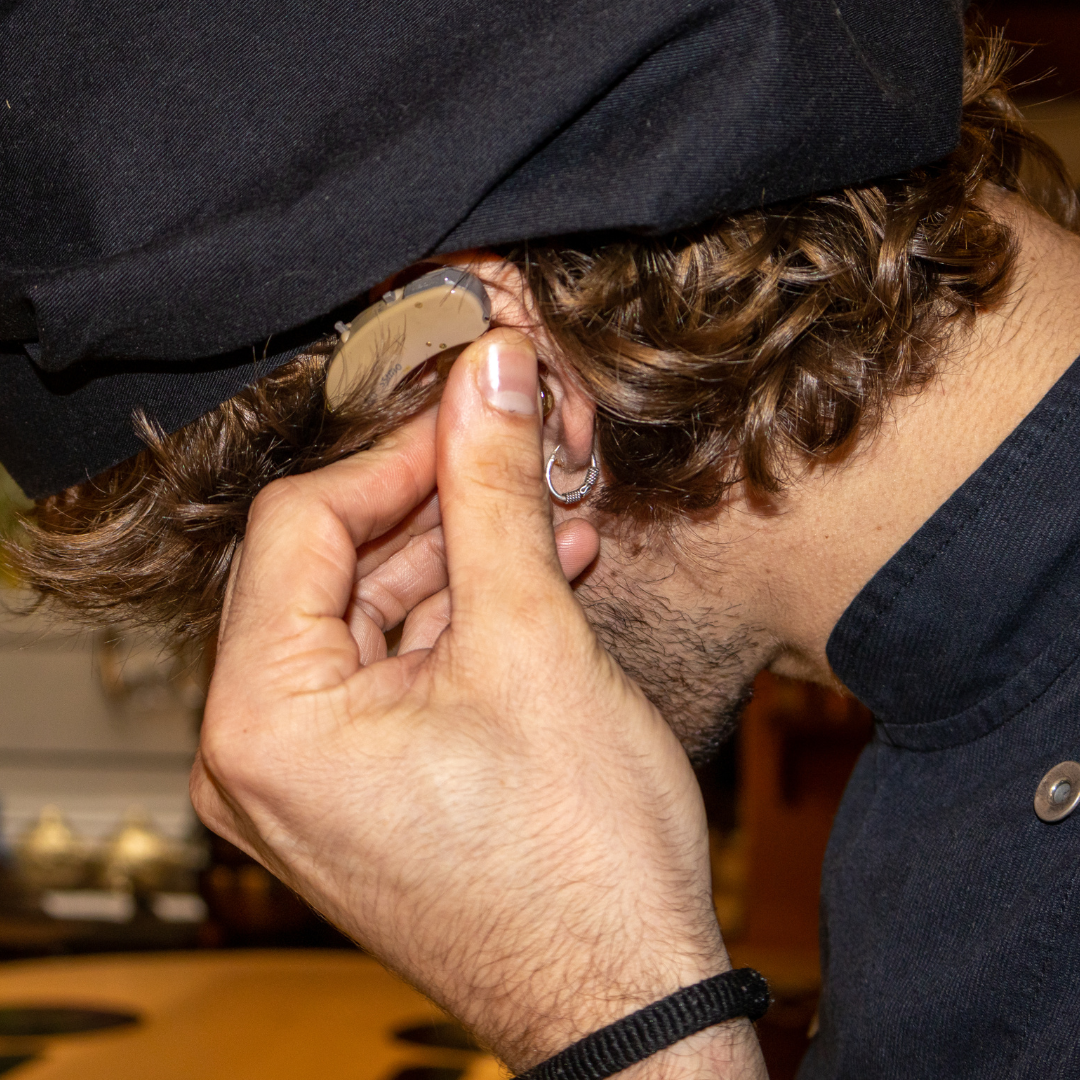
Tracking speech in busy dining venues can feel exhausting when environmental noise drowns out your hearing. Our specialists can evaluate hearing under both calm and noisy listening conditions to establish why noisy rooms present such difficulty. After uncovering the precise factors driving your difficult hearing, our team helps you select individualized auditory solutions.
Why Everyday Hearing Fails in Busy, Noisy Restaurants
A tranquil environment produces a beneficial signal-to-noise ratio where spoken dialogue easily overpowers weak ambient noise. Commercial restaurant spaces present the polar opposite acoustic dynamic. Competing conversations, background music, tableware clatter, and acoustic reflections clash with incoming speech, making auditory processing exceptionally strenuous.
This problem can occur with high-frequency hearing loss, auditory-processing difficulty, or age- and noise-related changes. Visual limitations from low lighting, cognitive fatigue, and sitting farther away from conversational partners amplify speech degradation. Some patients pass standard pure-tone evaluations with normal scores yet exhibit substantial impairment during specialized speech-in-noise testing. Experiencing speech-recognition struggles in noisy dining venues warrants a formal audiological evaluation regardless of seemingly normal quiet hearing.
How Is High-Frequency Hearing Loss Diagnosed?
We begin with a history of the situations that cause trouble, along with questions about noise exposure, tinnitus, medications, family history, and changes in either ear.
Clinical pure-tone audiometry identifies hearing threshold levels across various frequencies by delivering sounds through air and bone pathways. In high-frequency hearing loss, the audiogram reveals a sloping configuration where hearing acuity drops progressively as pitch frequencies increase. Extended test batteries incorporate acoustic tympanometry to rule out middle-ear pathology along with suprathreshold word-recognition testing.
A quiet sound booth cannot replicate complex dining room acoustics, which makes clinical speech-in-noise testing especially informative. It measures how well you recognize words or sentences as competing sounds become louder. In combination, these diagnostic metrics reveal whether communication hurdles involve audibility thresholds, speech discrimination, neural noise management, or mixed conditions.
Adult Auditory Processing Disorders and Speech Perception
An auditory processing disorder compromises how the central auditory pathways and brain decode incoming acoustic information. A patient’s ears may demonstrate normal pure-tone sensitivity, but their central processing system struggles to separate background babble, distinguish consonant sounds, or follow swift discussions. Our protocol begins by thoroughly testing peripheral hearing before determining if a specialized central auditory-processing battery or interdisciplinary referral is warranted.
Effective Techniques to Hear Better in Noisy Surroundings
Strategic behavioral modifications can substantially improve the auditory signal reaching your ears while maximizing supportive visual cues. When planning to dine out, select restaurants with calmer atmospheres or arrange reservations during off-peak hours. Dining locations utilizing sound-absorbing elements like booths, felt panels, window curtains, and carpet offer better acoustics than high-ceilinged rooms with hard surfaces.
In-venue communication guidelines:
- Request table placement positioned away from dishwashing stations, bustling bars, sound speakers, and celebratory gatherings.
- Position yourself with your back toward a solid partition to dampen intrusive background noise from behind.
- Position yourself directly opposite your companions where direct lighting highlights their facial expressions.
- Sit as close to the speaker as comfort permits to preserve speech volume and clarity.
- Place your better-hearing ear toward the person you most want to hear.
- Ask the speaker to rephrase the missed portion instead of repeating everything.
- Verifiably confirm essential conversational facts instead of bluffing comprehension.
- Excuse yourself for a momentary quiet pause when listening exhaustion starts to mount.
- Ask companions to speak clearly at a natural pace.
- Shouting creates acoustic distortion that actively compromises speech understanding rather than helping.
Assistive Listening Technologies for Noisy Environments
The best technology depends on the cause of the difficulty, the listening environment, and whether hearing loss is present. Modern clinical hearing aids integrate directional microphone polar patterns, automated digital noise suppression, and personalized restaurant memory settings to highlight frontal speech and reduce background competition. Patients must uphold realistic expectations because modern amplification cannot strip out every ambient human voice completely.
A remote microphone can provide a stronger improvement in the signal-to-noise ratio. The microphone is placed near or worn by the speaker and sends that voice directly to compatible hearing aids or another receiver. By streaming directly, this technology overcomes acoustic falloff from distance and surrounding environmental noise.
Other useful options include:
- Table microphones for small-group conversations
- Hearing-loop telecoils that stream clean audio in loop-equipped establishments
- Real-time smartphone speech-to-text transcription and live-captioning apps
- Modern wireless hearables delivering directional beamforming and sound enhancement
- Sound-meter apps and acoustic dining directories for locating quiet venues
We can compare options, confirm compatibility, and teach you how to use the selected device.
How Can a Doctor Help with Hearing in Loud Places?
A professional clinical assessment moves beyond basic baseline statements like “I hear fine in quiet rooms.” Our audiology team assesses the unique environments, speaking partners, and ambient noise profiles that challenge you to choose targeted diagnostic tools. Testing routinely combines pure-tone audiometry, middle-ear impedance tests, speech discrimination, and speech-in-noise measures. Diagnostic auditory-processing testing may be recommended if your clinical symptoms and baseline evaluations suggest central auditory dysfunction.
Any sudden, asymmetric, or rapidly deteriorating hearing loss demands immediate medical evaluation by an ear, nose, and throat physician. Personalized patient care establishes the true medical source of your listening problems instead of assuming ambient noise is solely responsible.
Arrange a Hearing Evaluation With Us Now
If struggling through dinner conversation leaves you mentally exhausted, detached, or constantly guessing, schedule a complete hearing evaluation with our clinic. We can explore ways to help with hearing in noisy environments with hearing-aid adjustments, assistive tools, or rehabilitation options that may fit your needs.
Contact our audiology office today to schedule your evaluation and move toward effortless, confident conversations.