
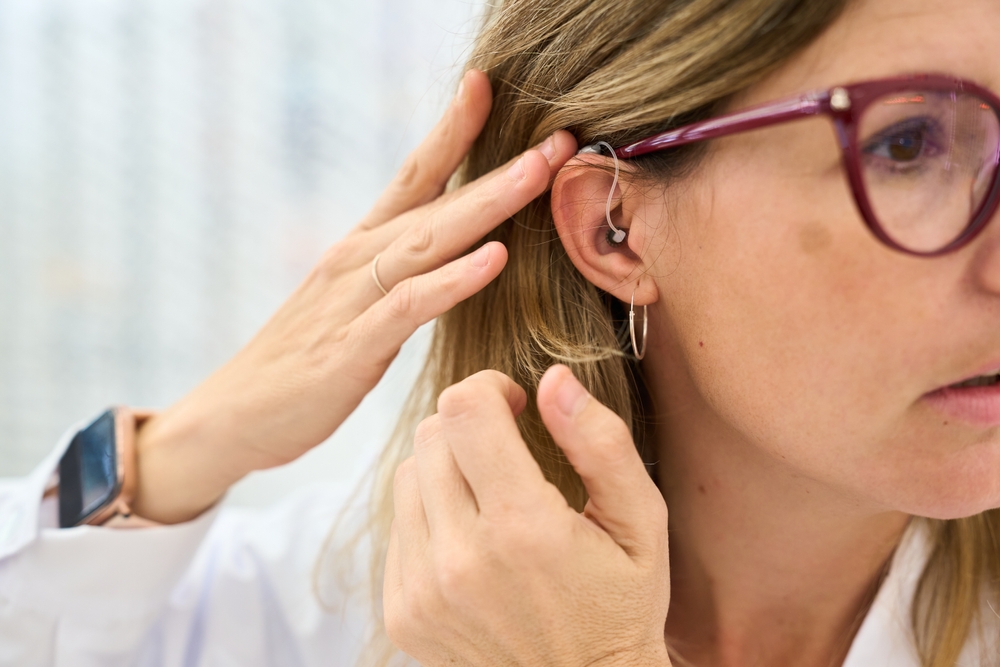
It is incredibly common for individuals to resist getting hearing instruments simply because they dread a bulky appearance or an uncomfortable fit. And that’s completely understandable! In various scenarios, patients expressed fear that wearing an obvious device would cause peers to omit them from casual conversations due to perceived listening limitations.
For many people, this image has stuck, making them hesitant to take the next step. The liberating truth is that twenty-first-century auditory tech offers a level of cosmetic elegance and physical comfort that surprises most patients. Revolutionary breakthroughs in micro-component miniaturization and ergonomic design have rendered these devices incredibly compact, ultra-lightweight, and virtually unnoticeable.
Should your reluctance stem entirely from memories of obsolete, bulky hardware, you owe it to yourself to discover current medical advancements.
Dispelling the Myth: Modern Devices Have Transcended Older Styles
If you close your eyes and picture a hearing aid, you might imagine something large, hooked over the ear, and visible from across the room. If that description matches your mental model, your perceptions are anchored in the primitive analog technology of the late twentieth century.
Since then, the entire category has evolved. Continuous refinements in ergonomic styling, nanometer-scale circuitry, and digital audio engineering have radically overhauled the modern cosmetic profile. They’re smaller, sleeker, and designed to blend in (or disappear entirely).
Numerous modern instruments are inserted completely within the ear canal structure, rendering them undetectable throughout standard daily dialogue. Different configurations sit comfortably behind the ear but feature such a low profile and featherweight build that observers naturally miss them.
Navigating Modern Hearing Technology: The Three Core Styles Evaluated
To understand how these sophisticated medical devices are physically configured, review this concise anatomical breakdown:
Invisible-in-canal (IIC)
This tier represents the absolute pinnacle of cosmetic concealment. An IIC device is positioned entirely past the second bend of the auditory canal, fabricated from a personalized physical matrix of your unique anatomy. Spoken interactions at arm’s length occur without anyone realizing a medical device is present. They remain an exceptionally sought-after solution for patients with mild-to-moderate deficits who refuse to compromise on cosmetic privacy.
Receiver-in-Canal (RIC) and Receiver-in-the-Ear (RITE) Designs
This architecture stands as the most frequently prescribed configuration in modern clinical practice. The system utilizes an incredibly small housing resting behind the ear, linked by a hair-thin translucent cable to a miniature speaker within the ear pathway. From an aesthetic standpoint, they look very similar to trendy consumer tech or modern bluetooth monitors. Most people won’t notice them unless they’re looking.
Traditional Behind-the-Ear (BTE) Reimagined
These sit fully behind the ear and are slightly larger, but they’re still far more streamlined than older versions. Clinically indicated for profound or severe hearing deficits, they deliver immense acoustic power without the outdated, conspicuous mass of the past.
The key takeaway: Today’s discreet hearing aids are designed to fit your life, not announce themselves.
How Current Hearing Technology Outperforms Traditional Amplifiers
The changes in modern hearing aids aren’t just cosmetic. In the current era, these processors operate like sophisticated wearable computers rather than simple analog sound amplifiers. A vast majority feature native Bluetooth connectivity, enabling seamless, wireless streaming of telephonic communication, media, and television audio directly into your auditory pathway.
Most come with smartphone apps, so you can adjust volume or switch settings without ever touching the device. If you enter a chaotic, crowded room, you can optimize your digital noise reduction settings to isolate speech within seconds. Furthermore, lithium-ion rechargeable cells have entirely eliminated the need to fiddle with microscopic, short-lived zinc-air batteries. Users simply place their instruments into a charging cradle before sleep, mirroring standard smartphone maintenance routines.
Empowerment Over Hesitation: Redefining Hearing Health Care
Even knowing all of this, it’s easy to hesitate. Acknowledging a sensory deficit and investigating rehabilitation options often forces a difficult confrontation with our own vulnerability and bodily changes. This can make us feel helpless and like we aren’t fully in control of what’s happening to our bodies.
Consider a healthier perspective: wearing a contemporary hearing system does not mean your body has failed you. Rather, they represent a proactive response to natural biological evolution—a transition shared by every human being. They’re proof that you’re taking action to support and equip your body in essential ways.
Imagine wearing a discreet, barely (if at all) visible device and finally being able to follow along in conversation, hear better in crowds, and focus on the things that really interest you. That is a magnificent example of reclaiming control over your life!
Schedule Your Personal Demonstration of Today’s Top Styles
The most effective method to permanently banish an obsolete stereotype is to personally examine current clinical options. We warmly welcome you to tour our practice, consult with our audiologists, and review our product lines with absolutely no financial or purchase obligations. View this consultation simply as a tactile opportunity to discover just how radically changed this technology has truly become.
Most people leave surprised by how small, comfortable, and natural modern hearing aids have become! Call our office to schedule your visit online today.