
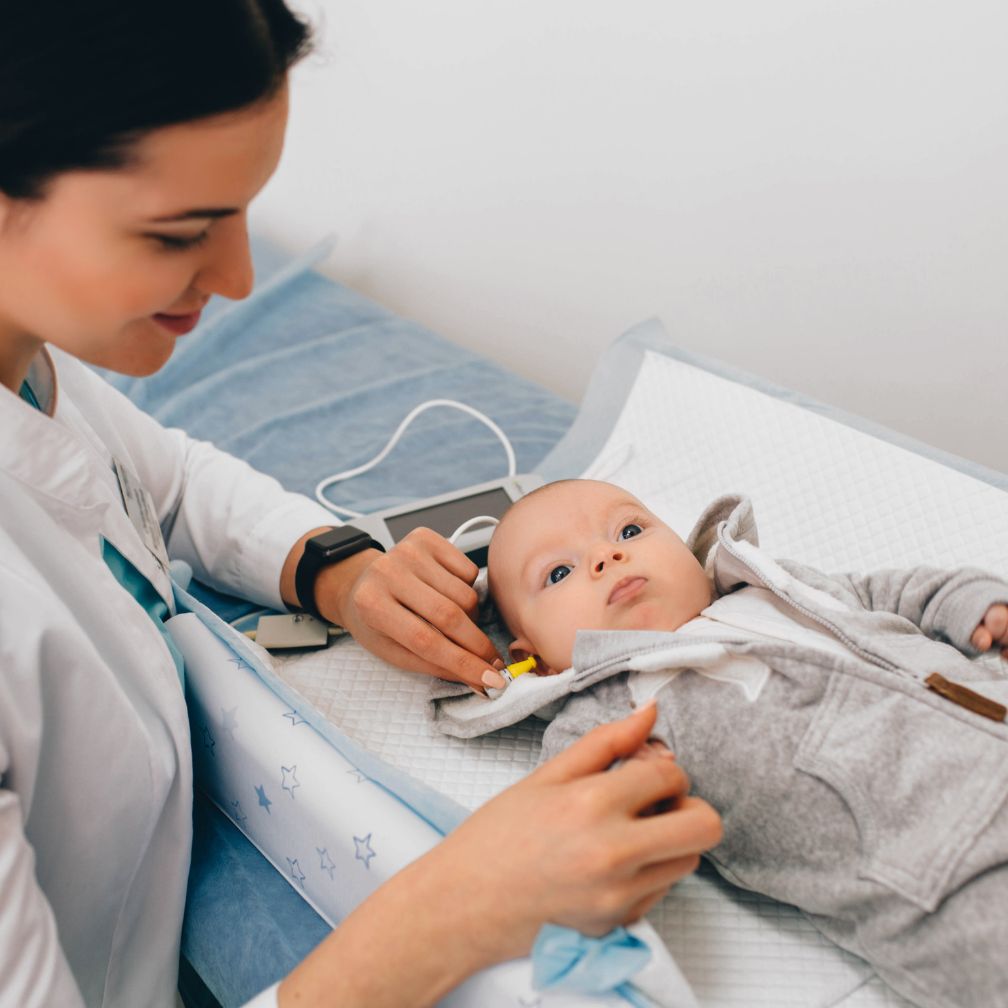
For both parents of a young infant, receiving news of an infant’s hearing impairment brings considerable anxiety and dread. However, the encouraging reality remains: through prompt screening and early care, infants with auditory challenges will achieve profound developmental success. Beyond question, such babies can gain verbal communication, expressive ability, and strong bonds within their surroundings, unlocking a highly enriched future!
Utilizing individual hearing aids alongside surgical cochlear implants offers two exceptionally successful approaches for supporting infants with hearing loss. Below, we take a look at how these technologies function and how to decide which unit is right for your child.
Unpacking the Foundations of Infant Hearing Loss
Early hearing loss in young infants often occurs because of specific root causes, such as:
- Spontaneous genetic mutations (even across households showing no history of impairment)
- Primary maternal congenital infections such as cytomegalovirus (CMV) or rubella exposure
- Labor complications, such as perinatal hypoxia or preterm birth
- Specific clinical medications given during neonatal intensive care stays
What remains the single most critical task? Swift clinical diagnosis. As a result, babies in American medical centers receive auditory checks prior to returning home. Dedicated pediatric hearing clinicians consistently enforce the standardized “1-3-6” intervention timeline:
- Completely screened within 1 month
- Full clinical diagnosis established before 3 months of age
- Early therapeutic care (utilizing personal devices or developmental therapy) started within 180 days of birth
Hitting these clinical targets offers infants an unparalleled opportunity for normal speech, expressive language, and cognitive progression. If you want guidance on these diagnostic stages, your pediatrician will gladly offer support!
Wearable Hearing Aids in Infant Care
When addressing infants with mild to severe auditory impairment, digital hearing aids routinely constitute the preferred initial approach. These small, custom-fit devices increase acoustic volume, helping infants distinguish human speech and natural sounds more clearly.
Tailored infant hearing instruments serve as:
- Clinical grade safe for deployment on babies merely weeks old
- Engineered with flexible, comfortable ear impressions that update as the baby matures
- Furnished with child-resistant battery compartments and dedicated pediatric safety elements
- Custom-programmed by a certified pediatric audiologist to match your child’s hearing profile
Throughout early infant development, hearing aids necessitate regular clinical recalibrations to maintain physical comfort and functional efficacy.
Cochlear Implant Options for Newborns
If a baby experiences severe to profound sensorineural hearing loss with limited benefit from wearable hearing aids, clinicians often recommend a cochlear implant. Unlike standard acoustic hearing devices, cochlear technology:
- Demand a dedicated surgical procedure for placement executed by a pediatric specialist
- Safely bypass non-functional structural regions inside the inner ear
- Convert sound into electrical signals that stimulate the auditory nerve directly
Modern surgical cochlear systems operate as:
- Fully FDA-approved for pediatric candidates as young as 9-12 months of age
- Exceptionally effective when combined with early intervention services and active parental backing
- Considered appropriate only after comprehensive diagnostic assessments by an expert audiologist and ear, nose, and throat doctor
That multi-step journey involves imaging, hearing tests, and detailed consultations regarding anticipated long-term progress.
Hearing Aids or Cochlear Implants: Distinguishing Features
- Mild to severe hearing loss relies on Hearing Aids; Severe to profound hearing loss requires Cochlear Implants
- Non-Invasive external fitting: Hearing Aids; Invasive surgical procedure: Cochlear Implants
- Acoustic sound amplification: Hearing Aids; Direct conversion to electrical signals: Cochlear Implants
- Treatment starts in newborn infancy: Hearing Aids; Access starts at 9-12 months: Cochlear Implants
Final Conclusions: Selecting the Right Path for Your Infant
Should your baby receive a formal hearing loss diagnosis, you possess multiple viable options alongside extensive professional backing. Under the care of specialized pediatric hearing doctors, many children go on to develop speech and language proficiency that rivals their normal-hearing peers.
Irrespective of whether your child receives fitting for hearing aids or surgery for cochlear devices, prompt intervention produces a lifelong positive impact.
Are you looking for clarity regarding your infant’s hearing development? Call our clinic today for a full evaluation and personalized care plan.